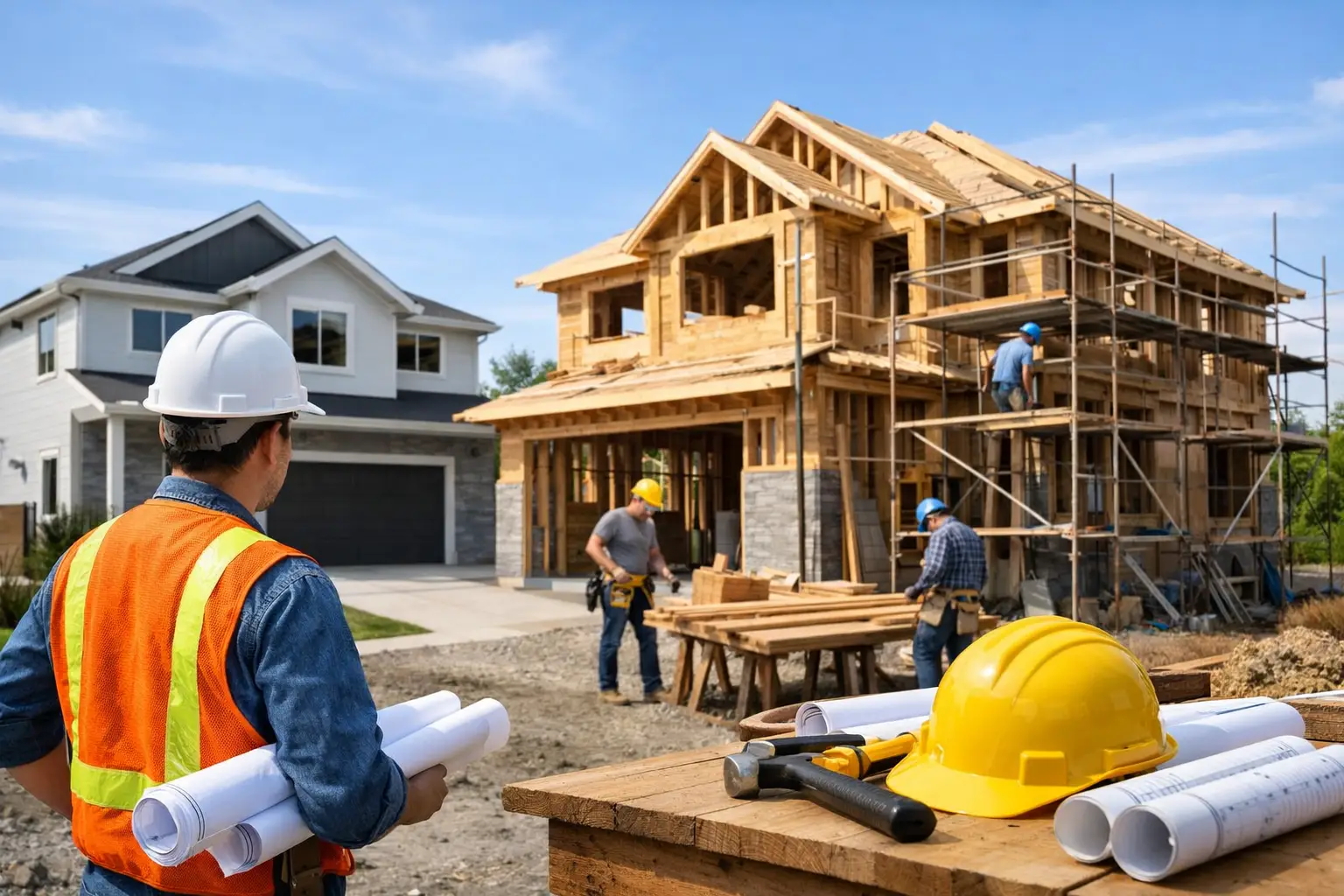
If you are planning a new home, a major renovation, or even a targeted upgrade like gyprock or cladding, one question tends to come up early – what is a residential construction company, exactly? The short answer is that it is a business that plans, manages, and delivers building work on homes. The better answer is that a good residential construction company helps turn a complex, high-stakes project into something organised, safe, and achievable.
For most homeowners, construction is not an everyday decision. It usually comes with a big budget, a long timeline, and plenty of pressure to get it right. That is why the role of the company matters. You are not simply hiring people to swing hammers. You are choosing a partner to coordinate trades, maintain quality, communicate clearly, and protect the value of your home.
What is a residential construction company?
A residential construction company works on houses and other lived-in residential properties. That can include new builds, extensions, renovations, repairs, interior fit-outs, external upgrades, and specialised works that improve how a home looks, functions, and performs.
Unlike contractors focused on commercial sites, residential builders work within the practical realities of home life. They deal with family schedules, occupied properties, neighbourhood conditions, council requirements, and the fact that every decision affects the comfort and value of someone’s home. That changes the way projects need to be managed.
A strong residential construction company usually handles more than the physical build. It may assist with quoting, planning, scheduling, trade coordination, material selection, compliance, and quality control from start to finish. For homeowners, that end-to-end support is often the difference between a project that feels manageable and one that becomes stressful.
What does a residential construction company do?
The scope depends on the business, but most residential construction companies offer a mix of structural and improvement works. Some focus heavily on custom homes. Others specialise in renovations or selected trade-based services. The broader the service offering, the more the company can manage without pushing you to juggle multiple providers yourself.
New home builds
For a new build, the company may oversee the project from early site preparation through to handover. That includes coordinating labour, ordering materials, managing the build sequence, and keeping the work aligned with approved plans and standards.
This matters because new homes involve dozens of moving parts. Slab work, framing, roofing, internal linings, cladding, waterproofing, finishes, and final fit-off all need to happen in the right order. When one stage slips, everything behind it can be affected.
Renovations and extensions
Renovation work is often less predictable than new construction. Once walls come off or old materials are removed, hidden issues can appear. A capable residential construction company knows how to assess those surprises, explain the options, and keep the job moving with minimal disruption.
Extensions bring another layer of complexity because the new work has to connect properly with the existing home. It is not just about adding space. It is about making the result look right, function well, and feel like one complete home rather than an obvious add-on.
Interior and exterior upgrades
Many homeowners do not need a full rebuild. They need practical improvements that increase comfort, presentation, or durability. That can include gyprock installation, wall and ceiling repairs, partitioning, external cladding, and other finish-level works that still require skill and proper project management.
These jobs are sometimes underestimated because they look smaller on paper. In reality, they can have a big impact on the appearance, performance, and resale appeal of a home. Good execution matters just as much here as it does on larger builds.
How a residential construction company differs from hiring separate trades
Some homeowners consider managing projects themselves by hiring a carpenter, then a plasterer, then a cladder, and so on. In a few limited cases, that can work. But it also means you become the project manager, scheduler, problem-solver, and point of contact for everyone involved.
A residential construction company brings those responsibilities under one roof. Instead of coordinating every step yourself, you deal with a team that takes ownership of the workflow, timing, workmanship, and accountability. That can save time, reduce confusion, and lower the risk of delays caused by gaps between trades.
There is a trade-off, of course. A single company may not always be the cheapest line item compared with finding individual workers one by one. But the cheapest path on paper can become expensive when mistakes, delays, or poor coordination start to stack up. For many homeowners, value comes from reliability and fewer headaches, not just the lowest quote.
What to expect when working with a residential construction company
The process should feel clear from the beginning. You explain your goals, the company assesses the project, and a scope of work is developed. That scope should set out what is included, what is not, and how the project is expected to run.
From there, the company typically manages planning, labour, materials, sequencing, and communication throughout the build. On a well-run project, you are not left guessing what happens next. You know who is responsible, what stage the work is in, and where key decisions need to be made.
Communication is a big part of the service. Homeowners usually care about more than technical compliance. They want to know whether the site is safe, whether the timeline is realistic, and whether the final result will match the agreed vision. A dependable builder treats those concerns seriously.
Signs you are dealing with the right company
Not every builder offers the same level of support. Some are strong on construction but weak on communication. Others talk well in the quoting stage but struggle with follow-through once work begins. The right residential construction company combines practical capability with consistency.
Look for a business that explains things clearly, sets realistic expectations, and shows respect for your budget and your home. You want a team that values quality workmanship, but also understands that reliability, cleanliness, responsiveness, and transparency are part of quality too.
It also helps to choose a company that can tailor its service to the project rather than forcing every client into the same process. Homes are personal spaces. Good builders recognise that no two households use their space in quite the same way.
Why the human side matters
Construction is a technical service, but for homeowners it is also personal. The work affects where your family lives, how your home functions, and how comfortable you feel during the process. That is why the best residential construction companies do more than build. They collaborate.
A community-minded builder often brings a different mindset to the job. There is more care in the way the team communicates, more respect for the people behind the project, and a stronger sense that the work should leave a positive mark beyond the site itself. For a company like PDK Construction, that means delivering quality residential work while staying grounded in service, skill-building, and support for the wider community.
That kind of approach will not be the deciding factor for every client, and that is fair enough. Some people only want the project done efficiently and to standard. But many homeowners want both – strong construction capability and a team that genuinely cares about the outcome.
When should you hire a residential construction company?
If the project involves multiple stages, more than one trade, structural changes, finish work, or any meaningful level of coordination, bringing in a residential construction company usually makes sense. The same applies if you want one point of accountability rather than managing separate subcontractors yourself.
Even smaller jobs can benefit when the quality of the finish matters or when the work needs to integrate neatly with the rest of the home. What looks straightforward at first can quickly become complicated once timing, materials, and compliance come into play.
The simplest way to think about it is this: a residential construction company helps homeowners move from idea to completed result with less fragmentation, less uncertainty, and a clearer standard of responsibility.
Your home deserves more than piecemeal fixes and crossed fingers. If you are investing in building work, choose a team that can guide the process with care, do the job properly, and treat your project like it matters – because it does.
